
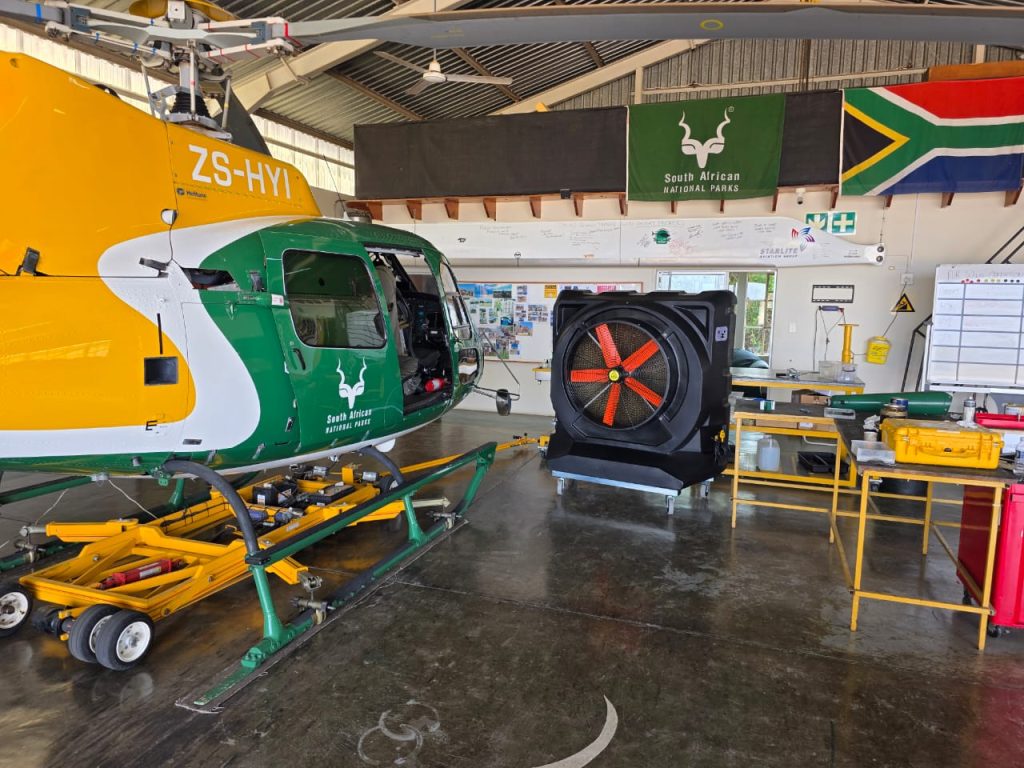
Improving Safety and Working Conditions in an Airport Hangar
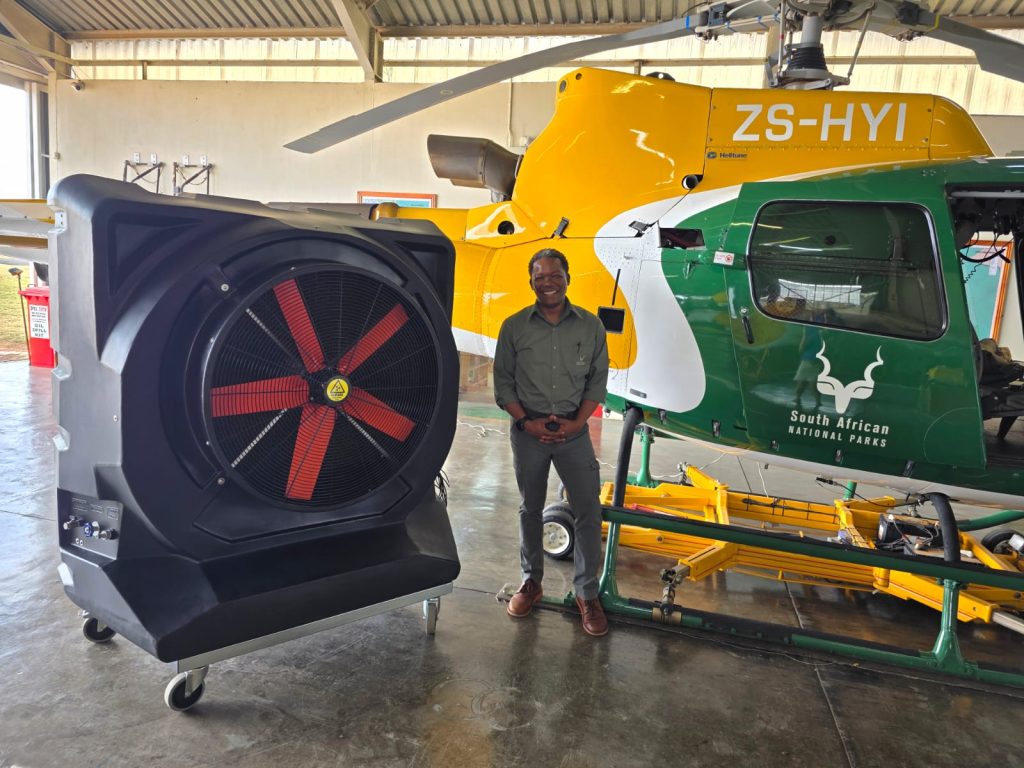
🌿 Caring for People, Cooling the Environment
How Evaporative Cooling Improves Working Conditions at Skukuza Airport
Evaporative cooling at Skukuza Airport became a priority when Mr Simelane from SANParks Skukuza Airport reached out to us with a clear concern: protecting his hangar crew from extreme heat conditions. In the Lowveld’s hot and humid climate, hangars can quickly become unbearable, affecting comfort, concentration, and productivity. His proactive approach reflects what real leadership looks like — caring for people first.
SANParks manages national parks and associated aviation facilities across South Africa, including Skukuza Airport. More information about SANParks and its operations can be found on their official website.
🔥 The Hidden Cost of Heat in the Workplace
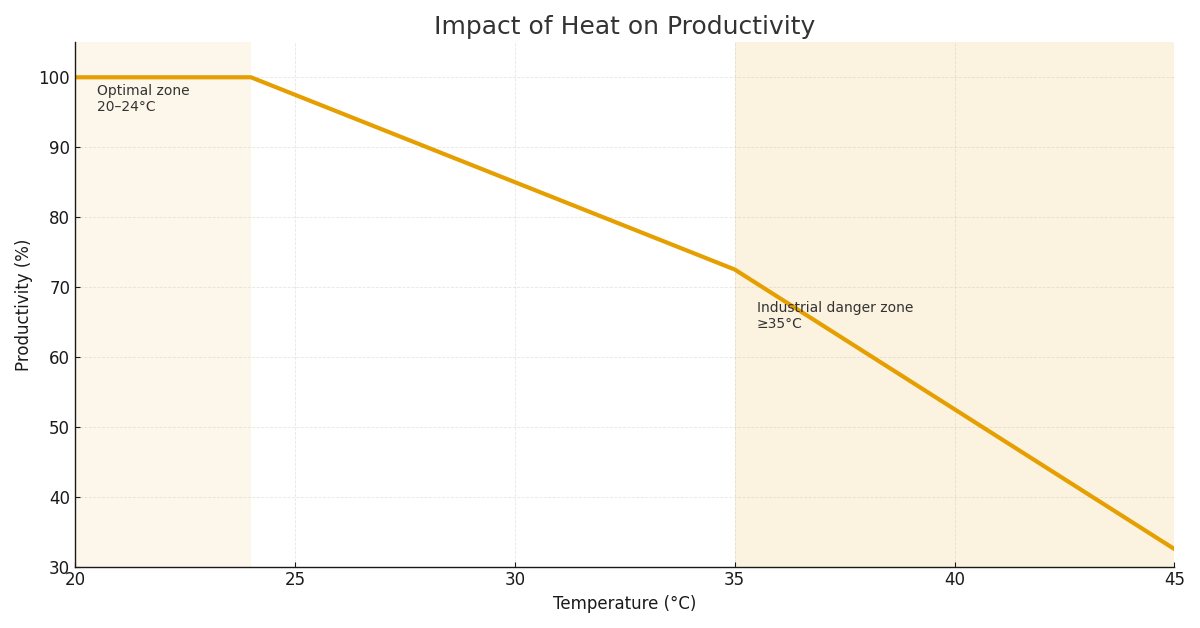
Working in high temperatures doesn’t just cause discomfort — it leads to heat stress, fatigue, and slower reaction times. In environments like aircraft hangars, workshops, and warehouses, this can compromise both safety and performance.
This scientific graph illustrates how worker productivity remains at 100% between 20–24°C, then declines by approximately 2–3% for every degree increase above 24°C. The chart also highlights a sharp industrial productivity drop beyond 35°C, based on heat-stress and workplace performance research.
Why Evaporative Cooling Works at Skukuza Airport
💧 Evaporative Cooling: A Natural, Energy-Efficient Solution
Evaporative cooling is widely recognised as an energy-efficient method for cooling large and semi-open industrial spaces, particularly in hot climates, due to its lower electrical demand compared to traditional air conditioning systems.
Unlike traditional air conditioning, evaporative cooling uses the natural process of water evaporation to deliver large volumes of cool, fresh air. As warm air passes through water-saturated pads, the temperature drops dramatically — instantly refreshing the workspace.
At MaxCool Cooling Solutions, we believe in cooling smarter, not harder. Our locally manufactured mobile evaporative coolers are engineered specifically for industrial environments such as hangars, factories, warehouses, and event venues.
The system delivers several practical benefits for large industrial and semi-open environments:
Key Benefits:
• Up to 80% lower energy consumption than conventional air conditioning
• No installation required – simply Add Water, Plug In 220V, and Cool Down up to 300 m²
• Improved air quality through continuous fresh-air ventilation
• Fully mobile and flexible — move the unit wherever the heat is highest
🌬️ Why Ventilation Matters Just as Much
Cooling is only half the solution — ventilation is the other half. Proper airflow removes heat, fumes, pollutants, and stale air, replacing it with oxygen-rich fresh air. This reduces headaches, dehydration, and airborne contaminants commonly found in industrial spaces.
Evaporative coolers naturally create positive-pressure ventilation, pushing out hot air and drawing in filtered outdoor air. The result is a safer, cleaner, and more comfortable workspace.
🌱 People Before Products
When leaders like Mr Simelane take action to improve their teams’ working conditions, they’re investing far beyond comfort — they’re prioritising well-being, safety, and long-term productivity. At MaxCool Cooling Solutions, we’re proud to support forward-thinking organisations like SANParks that understand a simple truth: a cool employee is a productive employee.
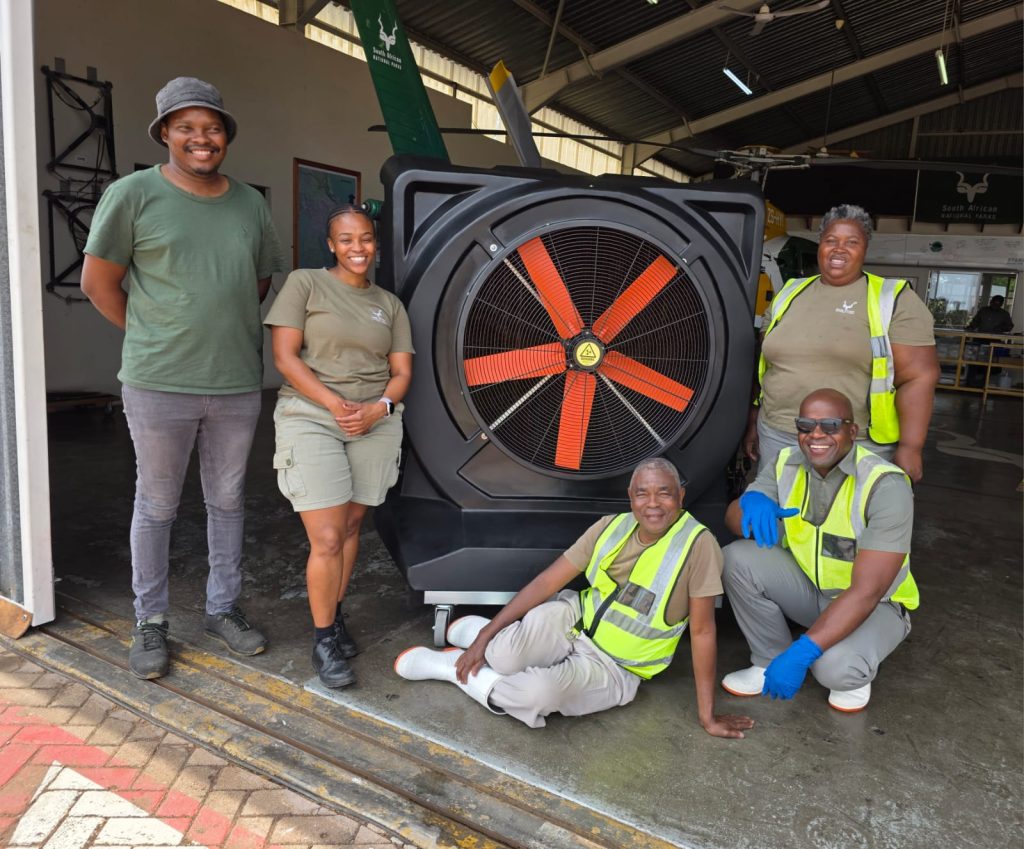
Prolonged exposure to high temperatures is widely recognised as an occupational health and safety risk in industrial environments, affecting concentration, fatigue, and productivity, according to international workplace safety authorities.
💡 Cooling Africa the Smart Way
Evaporative cooling is not a luxury — it’s a necessity in Africa’s climate. It’s cost-effective, environmentally friendly, and focused on worker comfort and safety.
This project forms part of MaxCool’s range of industrial evaporative cooling solutions designed for hangars, workshops, warehouses, and large facilities.
If you manage a facility, workshop, or hangar exposed to ongoing heat challenges, the Skukuza Airport case illustrates how prioritising employee wellbeing can lead to safer operations, improved comfort, and more sustainable long-term performance.